TL;DR: Canva proposals eat 22–37 hours a year and the numbers in them are disconnected from your live wholesale costs. The proposal and the recipe should be the same document.
The Real Cost of Building a Wedding Proposal in Canva
If you're building wedding proposals in Canva, you've got company.
Most solo event florists do. It's the tool that exists. It puts out something polished enough to send. It's free. Nobody designed it for florists. We figured it out.
The question isn't whether Canva works. It does. The question is what it costs.
Run the math on your own week
Here's a rough version for a mid-complexity proposal: pulling the recipe together, running the quote, laying it out in Canva, adjusting the design, exporting the PDF, sending it.
Most florists land somewhere between 30 and 60 minutes for a proposal they feel okay about sending.
Call it 45. Thirty events a year is 22.5 hours. Fifty events is 37.5.
That's a full workweek (close to it) gone to Canva.
The number surprises people when they see it on paper. And it's an undercount, because it doesn't include the back-and-forth when a bride wants to revise the scope, which means rebuilding the quote and reformatting the Canva file.
What Canva can't do
The bigger problem isn't time. It's that a Canva proposal is disconnected from everything else.
When I quote $650 for a bridal bouquet in Canva, that number isn't tied to my recipe. It isn't tied to my wholesale costs. If my wholesaler raises garden roses the week before the order, and I built that proposal two months ago, there's no way for me to know my margin just shifted.
I find out after I order.
Every florist who's been doing this for a few years has a story about a wedding that was profitable on paper and not in the bank. The cause is almost always the same: a quote built from memory, disconnected from actual stem costs at the time of ordering.
The proposal and the recipe should be the same document. Almost never are.
The other thing that happens in Canva
Canva proposals are one-way. You build, you export, you send. If a client asks to swap a flower or scale back the ceremony piece, you go back to Canva and rebuild.
If that change affects the stem order, you also go back to the spreadsheet and recalculate. Separately. By hand.
A proposal that lives inside the recipe system means scope changes cascade. You know what the revision does to margin before you say yes.
What a better workflow looks like
Build the recipe first. Every stem, every cost, every markup. The proposal comes from the recipe. A formatted client-facing version, calculated for you.
When the client adds three centerpieces, you update the recipe. The proposal updates. The purchase list updates. One source of truth, not three.
We're building this
Petal Studio's proposal builder ships in Sprint 4. It pulls from the recipe, generates a client-facing PDF, and updates when the scope changes. No Canva. No separate spreadsheet. No margin surprises.
Start a free trial now and you'll be on the list when it's live.
In the meantime, the invoice parser and recipe builder are already working. If your proposals are currently built from guesswork instead of live costs, fixing that piece first is worth doing. Proposal builder or not.
Start your free trial → No card required. 14 days.
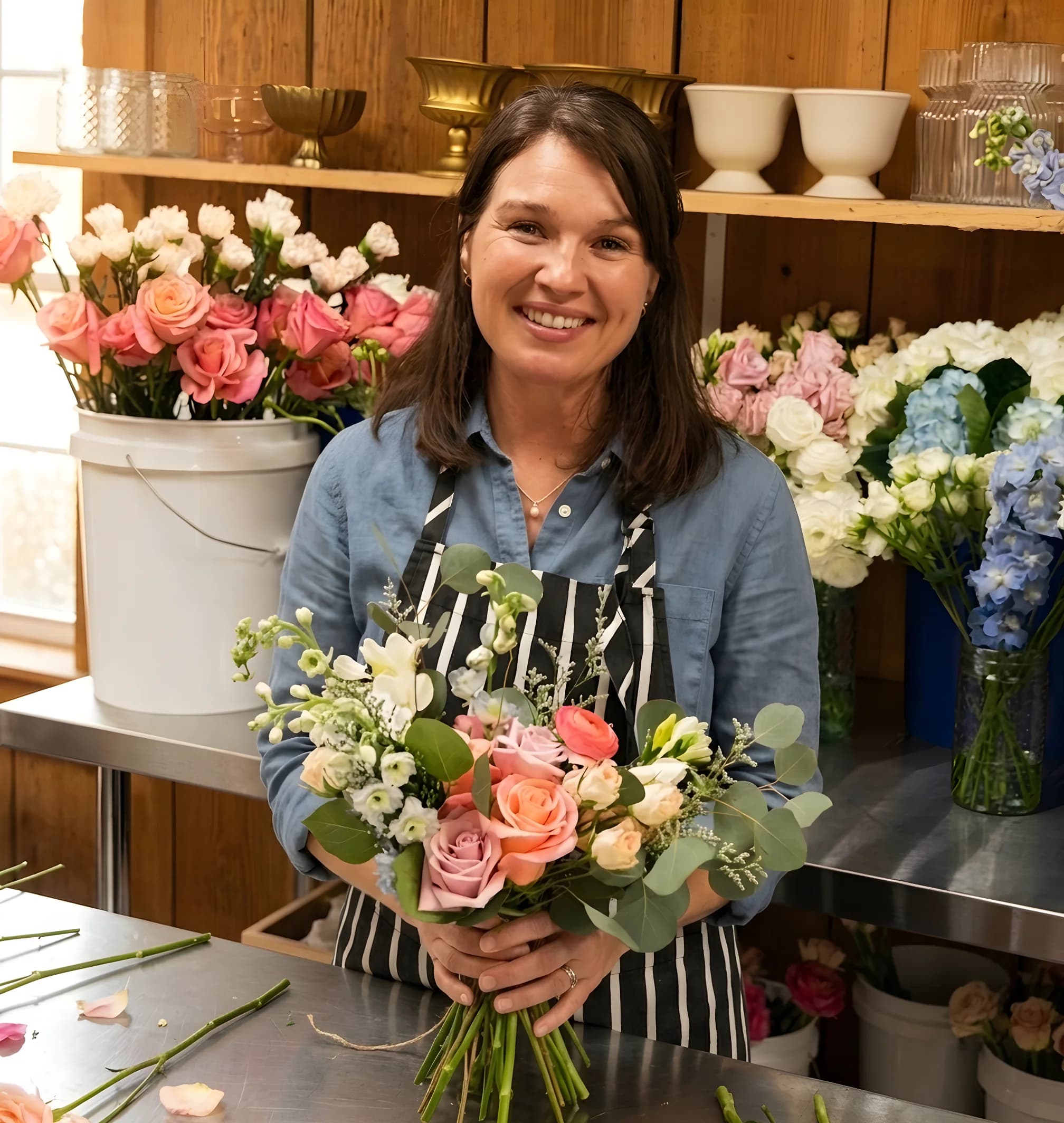
Heather Headley
Wedding florist · co-built Petal Studio with her husband Matt
Petal Studio handles the math so you can handle the stems.
Start free trial